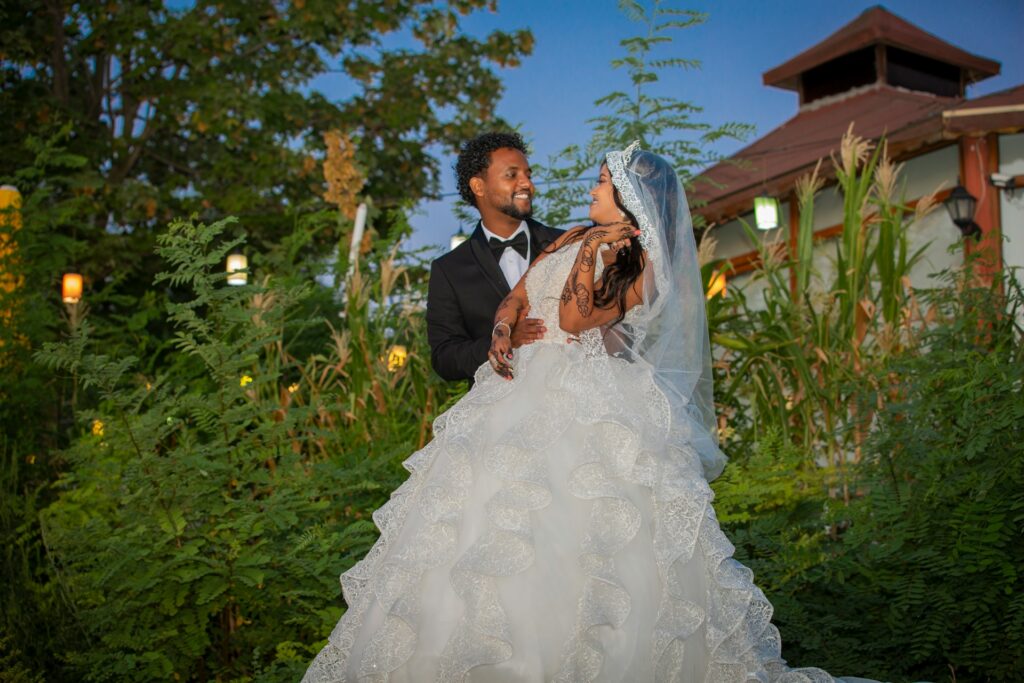
The average couple spends $3,200 on a wedding photographer. Many couples spend $5,000. A few spend $10,000. And almost every wedding forum on the internet is full of one of two posts:
“We skipped the photographer and I regret it every single day.”
…or:
“We spent $4,500 on a photographer and only ever look at 12 of the photos.”
Both are true. The goal of this guide isn’t to talk you out of (or into) hiring a pro. It’s to help you build a deliberate photo plan — because the couples who regret their wedding photos almost never regret because they chose the wrong vendor. They regret because they didn’t have a plan at all.
Quick Answer: The 3-Tier Framework
Before we get to the alternatives, here’s the framework most blog posts skip:
- REPLACE — Skip the photographer entirely. Best for elopements, courthouse weddings, and intimate gatherings under ~40 guests.
- REDUCE — Hire a pro for 2–3 hours covering only the ceremony and formal portraits. Cover the reception with guest photos. Works for almost every wedding size.
- RESCUE — You already had your wedding and the photos aren’t what you hoped. There are options. Skip to that section if this is you.
Most “alternatives to wedding photographer” guides treat this as a list. It isn’t. It’s a decision. Pick your tier first, then the tactic.
What a Wedding Photographer Actually Costs in 2026
| Tier | Price | What you get |
|---|---|---|
| Budget pro | $1,000–$2,000 | 4–6 hours, digital files only |
| Mid-range | $2,500–$4,500 | Full day, edited gallery, prints |
| Premium | $5,000–$10,000+ | Full day, album, second shooter |
Photography is consistently the 2nd or 3rd largest line item on a wedding budget. It’s also the line item couples most often say they wish they had handled differently — both up and down. Spending $4,500 doesn’t guarantee photos you love; spending $0 doesn’t guarantee photos you’ll regret.
TIER 1 — REPLACE: Skip the Pro Entirely
This tier is for couples where a professional photographer genuinely isn’t worth it. Be honest with yourself. Read the section below carefully — if any of the “Hire the pro” boxes apply to you, jump to Tier 2 instead.
Should you actually skip the photographer?
Skip the pro if most of these apply:
- Your wedding has fewer than ~40 guests
- It’s an elopement, courthouse, or destination microwedding
- You have a friend who shoots seriously as a hobby (not just “owns a nice camera”)
- Your venue has outstanding natural light (golden hour outdoor, daytime windows)
- You’d happily trade some imperfection for authenticity and budget freedom
- Photography is genuinely not in your top 5 wedding priorities
Hire the pro if any of these apply:
- 100+ guests with complex logistics
- Dark church, evening ceremony, or challenging indoor lighting
- Formal extended-family portraits matter to you
- You want consistent edited results, guaranteed
- A friend photographer would feel pressured and you’d hate that
- Your venue won’t be easy to re-shoot in (destination, one-time-only setting)
If you’re sitting in the “skip” column, here are the four ways to actually pull it off, scored honestly:
Replacement Option A: A Photography Student
Cost: $300–$800 · Quality: ⭐⭐⭐⭐ · Reliability: ⭐⭐⭐ · Effort: Medium
Final-year photography students at universities or art schools have strong technical skills and are building their portfolios. Many will shoot a full day for $300–$800 in exchange for portrait rights and your permission to use the images professionally.
This is the highest-quality replacement option in the Replace tier. A motivated final-year student is technically competent in a way an enthusiastic friend is not. The trade-off is experience: they’ve shot dozens of sessions, not hundreds, and they’re more vulnerable to high-pressure situations going sideways.
The non-negotiables when hiring a student:
- Ask to see 3 complete galleries from real events. Not highlights. Full galleries. Anyone can curate 10 great shots; consistency across 300 shots tells the truth.
- Ask specifically for low-light samples. Indoor and dim. Most wedding venues are not bright.
- Ask: “What happens if your camera fails?” If the answer is hesitant, walk away. Professionals carry a second body. Students often don’t.
- Get the deliverables in writing: how many edited photos, in what format, by what date. A typical figure is 300–600 edited images delivered in 4–6 weeks.
- Give them a detailed shot list a week ahead. (We’ve included a template at the bottom of this guide.)
- Have them visit your venue before the day if possible. Knowing the layout means they arrive confident, not problem-solving during your ceremony.
- Free them from social duties. Family will pull them into conversations. Make it clear they’re working.
- Write them a thoughtful testimonial within a week. For a portfolio-building student, this is part of the compensation.
Replacement Option B: A Talented Friend
Cost: $0–$200 (gift) · Quality: ⭐⭐⭐ · Reliability: ⭐⭐ · Effort: Medium
This is the option Reddit warns you about the most, and the warnings are correct when the friend is “someone who owns a nice camera.” They’re wrong when the friend is genuinely serious about photography as a hobby — has shot dozens of portrait or event sessions, can confidently work in manual, and owns more than one lens.
The honest rule: if you have to ask “are they good enough?”, they are not. If you’d hire them at $500 if they weren’t your friend, they are.
If you have one of these people in your life:
- Be clear they are working, not attending. They will miss your wedding as a guest.
- Give them the shot list a week ahead.
- Discuss editing style before the day. Bright and airy? Moody? Documentary? They edit how they edit; this won’t change.
- Gift, don’t pay. A meaningful gift card or experience matters more than a $200 cheque.
- Always run a guest photo-sharing backup alongside. Always. This is the single most important sentence in this guide.
Replacement Option C: Tripod and Intervalometer (Self-Portrait Setup)
Cost: $100–$300 · Quality: ⭐⭐⭐⭐ (with planning) · Reliability: ⭐⭐⭐ · Effort: High
For elopements and tiny ceremonies — fewer than 15 guests — a rented mirrorless camera on a tripod with an intervalometer or phone-remote shutter is shockingly effective. Plan around golden hour, scout your spot the day before, and run the camera at burst mode during ceremony moments.
This is the most underrated option for genuinely intimate weddings. The photos look intentional and intimate because they are intentional and intimate. The trade-off is that it’s labour-intensive and only works for very small ceremonies.
Replacement Option D: Guest Photo Sharing as Your Primary Strategy
Cost: Free–$49 · Quality: ⭐⭐⭐ · Reliability: ⭐⭐⭐⭐ · Effort: Very Low
This is the only option that scales: hundreds of cameras, hundreds of angles, every moment of the day captured by people who actually know your story. Place a QR code on every table and on the back of the program. Guests scan, upload, done. No app download, no logins, no chasing files from Aunt Linda three months later.
Where guest sharing wins:
- The reception, completely. Speeches, dancing, the chaos. Pros physically cannot be in three places at once; your guests already are.
- Getting-ready moments. The most candid hours of your day.
- Reactions during the ceremony — your parents crying, your friends laughing.
Where guest sharing alone cannot replace a pro:
- Formal extended-family portraits with consistent lighting
- Detail shots (rings, flowers, table settings) — possible but inconsistent
- Edited, gallery-ready images for printing large
For elopements and intimate ceremonies, this can be your primary strategy. For weddings above ~40 guests, it should always be a layer on top of one of the other options.
This is what QR Moments does, and it’s why we built it: one QR code, every guest, no apps, every photo in one place by the end of the night.
TIER 2 — REDUCE: The Hybrid Strategy (What We Actually Recommend)
For ~80% of couples reading this, the smartest answer isn’t replacing the photographer. It’s reducing what you hire them for.
The 2-Hour Pro + QR Sharing Strategy
Hire a professional for two to three hours only, covering:
- The ceremony
- Immediately after: formal portraits with extended family
- A 30-minute window of “just the couple” portraits at golden hour
That’s it. They leave before the reception. Cost: $400–$900 in most US markets.
Cover the reception, the speeches, the dancing, the getting-ready, and the after-party with guest photo sharing. By midnight, your album typically has 300–500 candid photos. No app downloads. No chasing files.
Total cost: $450–$950 versus $2,500–$4,500 for full-day coverage.
You get the two things only a professional can deliver — properly composed family formals and edited ceremony shots — and the one thing only guests can deliver — hundreds of candid moments from inside the celebration. Most couples who do this say they prefer the result to a full-day pro.
The “Videographer as Photographer” Hack
Almost nobody mentions this: in many markets, a videographer can be hired for less than a photographer for similar hours, especially if you book outside peak season. Modern videography shoots at 4K-or-higher, and a competent videographer can pull crisp print-quality stills from the footage for you on request.
You end up with both a wedding film and a set of stills, often for what a mid-range photographer alone would cost. Worth a quote.
This works best when you’ve already decided videography is something you want — it’s not a free upgrade, it’s a smarter package. Ask any videographer if “stills extraction” is something they offer.
Other Reduce Tactics
- Pre-wedding portrait session. Hire a pro for a 90-minute “first look” or engagement-style session the day before or the morning of. You get edited, gallery-quality portraits of the two of you in your wedding outfits. Cost: $200–$500. Cover the wedding itself with guest sharing.
- Photo booth + guest sharing combo. A photo booth handles your “fun group shot” need. Guest sharing handles everything else. Skip the photographer entirely.
- Family-formals-only package. Some photographers offer 60-minute formal-portrait-only packages for $300–$500.
TIER 3 — RESCUE: You Already Got Married and the Photos Aren’t What You Hoped
This is the section nobody on the internet writes, because everyone is trying to sell you a service for an event that hasn’t happened yet. If you’re reading this after the wedding, here’s what you can actually do:
1. Collect the photos you don’t have yet
Most couples never collect 60–80% of the photos taken at their wedding. They live on guests’ phones forever. Send a single message to your wedding chat or guest list — “we’re putting together our album, please upload anything you have here” — and you’ll typically pull in 200–400 photos you’ve never seen.
Easiest way: a free QR-coded shared album (QR Moments offers this for free after the wedding too). Old school: a Google Drive folder works fine.
2. Hire a retoucher, not a re-shoot
If the photos exist but the editing is rough, a freelance photo editor on Fiverr or Upwork can colour-grade and clean up 50 photos for $50–$150. For raw images from a friend or student, this often transforms the deliverable.
3. Commission a painted portrait from a guest photo
If there’s one shot you genuinely love but it’s not high-resolution enough to print large, custom painted portraits run $150–$500 and give you a wall-worthy piece from any clear reference image.
4. Schedule a “day after” or anniversary shoot
A 90-minute “in your dress, in beautiful light, no time pressure” shoot the day after — or on your first anniversary — gives you the formal portraits you wish you had. Many photographers actually prefer these to wedding days. $300–$600.
5. Recover what’s hiding in videos
If anyone took video, even on phones, a freelance editor can extract clean stills from 4K footage. Anniversary speeches, ceremony moments, first dance — there’s almost always more there than you think.
The Honest Side-by-Side Comparison
| Option | Total cost | Photo count | Quality | Reliability | Best for |
|---|---|---|---|---|---|
| Full-day pro | $3,000–$5,500 | 400–800 edited | ⭐⭐⭐⭐⭐ | ⭐⭐⭐⭐⭐ | Big weddings, complex lighting |
| 2-hr pro + guest sharing | $500–$1,000 | 100 pro + 300 candid | ⭐⭐⭐⭐ | ⭐⭐⭐⭐⭐ | Almost everyone |
| Photography student | $300–$800 | 300–600 edited | ⭐⭐⭐⭐ | ⭐⭐⭐ | Budget couples, smaller weddings |
| Talented friend | $0–$200 (gift) | 200–500 raw | ⭐⭐⭐ | ⭐⭐ | If the friend is genuinely serious |
| Guest sharing only | Free–$49 | 200–500 candid | ⭐⭐⭐ | ⭐⭐⭐⭐ | Elopements, intimate ceremonies |
| Tripod self-portraits | $100–$300 | 50–200 | ⭐⭐⭐⭐ | ⭐⭐⭐ | Elopements only |
| Disposable cameras | $150–$300 | 100–200 (variable) | ⭐⭐ | ⭐⭐ | Nostalgic vibe, not primary |
Four Real Couples, Four Different Approaches
Emma & Dan — backyard wedding, 60 guests, $450 total. Hired a final-year photography student from a local arts college for a six-hour day ($400). QR Moments QR codes on every table for the reception. Got 580 edited shots from the student plus 312 guest uploads. National average comparison: $3,200.
Priya & Marcus — mountain elopement, 12 guests, $180 total. Rented a Sony mirrorless on a tripod ($120). A photographer friend handled the group shots informally. Used golden hour and an intervalometer for ceremony coverage. QR Moments handled the dinner that followed.
Sarah & James — venue wedding, 145 guests, $750 total. Hired a professional for the ceremony and family formals (2 hours, $700). After formals, they left. QR Moments on every reception table. By 11 pm: 447 guest photos, plus professional ceremony coverage. They prefer their gallery to friends who paid $4,000+ for full-day coverage.
Lena & Chris — restaurant buyout, 35 guests, $200 total. A university friend who’d been shooting portraits seriously for three years. Detailed shot list, freed from all social duties, $200 voucher as thanks. Intimate setting made the lighting manageable. Ran QR Moments alongside so the friend could enjoy dinner.
Myths Worth Killing
“Guest photos are always blurry and unusable.” Modern smartphones shoot 4K. An iPhone or Galaxy in decent light produces print-quality images. The limit isn’t the device, it’s framing and timing.
“You’ll regret not hiring a professional.” What couples regret is not having a plan. Couples who deliberately chose a student, a friend, or guest sharing — and prepared properly — rarely regret it. Couples who skipped without a plan almost always do.
“Photography students are unreliable.” A final-year student with a strong portfolio has shot dozens of sessions and has more to lose from a bad outcome than an established pro. Vet the portfolio, check low-light samples, get the deliverables in writing.
“QR code sharing only works for tech-savvy crowds.” Scanning a QR code is one tap on a phone camera. Participation across all age groups consistently runs 70–90% with table cards plus a brief MC announcement.
“You need professional coverage of every moment.” When couples review their wedding gallery years later, they consistently treasure 30–50 shots. The ceremony, a few formals, a few candid moments. A 2-hour pro covers the first two. Guest sharing handles the third.
A Free Shot List You Can Hand to Anyone
Copy this into a doc and give it to your photographer, student, or friend a week before. It’s the difference between “they got the cake cutting” and “they missed it.”
Pre-ceremony (30 min):
- Both of you separately, getting ready
- Rings, shoes, dress/suit on hanger or laid out
- Parents seeing you ready, first time
- Bridal party or close friends together
Ceremony (the must-haves):
- You walking in (from front and from behind)
- Your partner’s face the moment you appear
- The exchange of vows (close, both faces)
- The kiss (one wide, one close)
- Walking back out (both faces visible)
Formals (15–20 min total, plan exact groupings):
- Just the two of you (multiple)
- You + immediate family (each side separately, then combined)
- Full extended family (one group shot)
- Wedding party (full group + each side)
Reception:
- First dance (start, peak emotion, end)
- Parent dances
- Speeches (speaker + your reactions)
- Cake cutting
- Candid table shots during dinner
- Open dance floor at peak energy
- Send-off / final moment
Print it. Hand it over a week before. Walk through it together. Done.
Let Your Guests Capture What the Photographer Can’t
Even the best photographer can’t be in two places at once. QR Moments gives every guest a QR code that drops their photos and videos into one private album. No app downloads, no logins, no chasing files weeks later. Pair it with any photography strategy in this guide — student, friend, hybrid pro, or solo elopement setup — for complete coverage of your day.
Free to start. Set up in five minutes. Photos in your hands by midnight.
→ Set Up Guest Photo Sharing Free
Frequently Asked Questions
Is it actually okay to have a wedding without a professional photographer?
Yes, especially for elopements, intimate ceremonies, and couples with a genuine plan. What’s not okay is having no plan at all and hoping it works out. Pick a tier (Replace, Reduce, or Rescue), pick a tactic, and prepare deliberately. Couples who do this almost never regret their choice.
What is genuinely the cheapest way to get good wedding photos?
Guest photo sharing (free with QR Moments) combined with a friend who shoots seriously as a hobby. Total cost: a thank-you gift. For more reliability with minimal cost, a photography student at $300–$500 plus guest sharing is the strongest budget combination.
How do I find a photography student for my wedding?
Search the fine arts and photography departments at local colleges and universities, attend graduate showcases, search Instagram with your city plus “wedding photography student,” and post in local photography Facebook groups. Final-year students with strong portfolios are the most reliable bet.
Can guest photos really replace a professional photographer?
For elopements and intimate ceremonies under ~40 guests, yes. For larger weddings, guest photos should complement (not replace) at least a 2-hour professional package covering the ceremony and formal portraits. The hybrid strategy — small pro + guest sharing — is the highest-value option for almost every couple.
How many photos do guests actually upload at a typical wedding?
With QR Moments QR sharing, couples typically receive 200–500 photos from a wedding of 80–150 guests, with a participation rate of 70–90% when QR codes are placed on every table and an MC announcement is made. Larger and younger guest lists trend higher.
What’s the single most important thing I should do regardless of which option I pick?
Run guest photo sharing alongside whatever else you choose. It’s free or nearly free, requires zero coordination from guests, and gives you a backup layer that captures everything your primary photographer misses. The couples who regret their wedding photos are almost always the ones who relied on a single source.
What if I already got married and don’t love my photos?
Skip to the Rescue section above. Collect guest photos retroactively, hire a freelance retoucher to clean up the editing, commission a painted portrait from your favourite shot, or book a 90-minute “day-after” or anniversary shoot. There are more options than couples realise.
Leave a Reply